Location
Water Valley, Alberta
Completion Date
2023–2024 project record; commissioning date unconfirmed
Category
View all Alberta projectsSystem Type
Solar-assisted greenhouse hydronic heating with a proposed PV/DC pump bypass
Project Size
12 solar thermal collectors; tested thermal capacity requires verification
Equipment Used
12 solar thermal collectors; three storage tanks described in the archive; external heat exchanger; greenhouse in-floor heating; 100 W photovoltaic module and DC pumps described for a bypass arrangement
The Water Valley Greenhouse Project documents a solar-assisted hydronic heating design for a greenhouse in Water Valley, Alberta. The original 2023–2024 project account describes solar thermal collectors, hot-water storage and in-floor heat distribution.
The archive describes collector-tube installation and commissioning as work still to be completed. As of this editorial review on November 24, 2026, a confirmed commissioning date and current operating status have not been established from the available project record. The photographs and design description should therefore be read as project documentation, not proof of a fully commissioned year-round system.
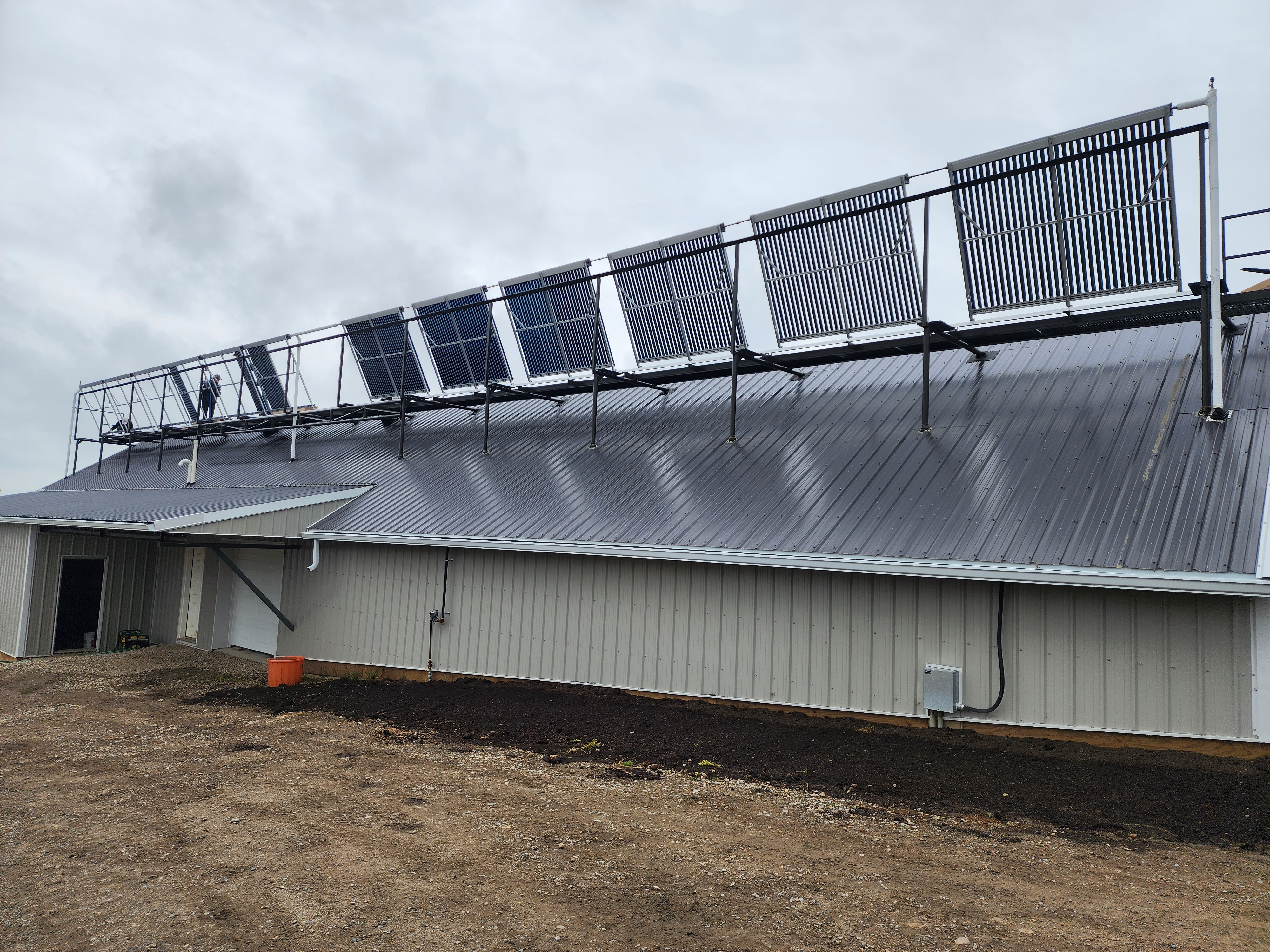
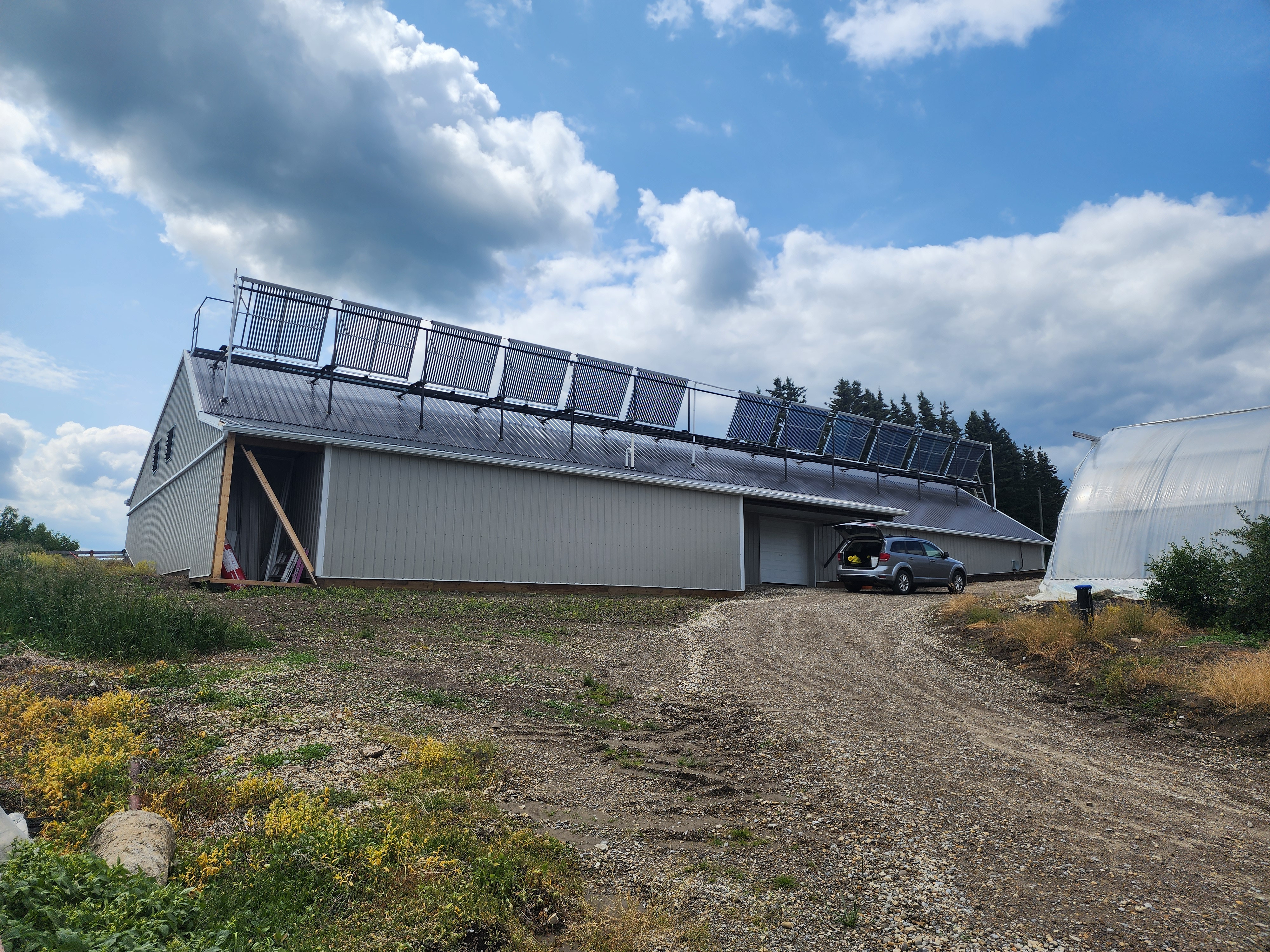
The gallery includes both mounting-stage photographs and images with evacuated tubes fitted. These photographs show installation progress, but do not establish a commissioning date, tested output or current operating status.
The older equipment list refers to 2,400 L storage tanks without clearly establishing whether that volume is the combined capacity or a per-tank value. Storage capacity must be confirmed from the tank specifications and final system drawings before it is used for design or performance estimates.
The collectors gather heat for transfer to storage and the greenhouse’s hydronic distribution. Useful solar contribution depends on sunlight, collector performance, storage temperatures and the building’s heat demand. Winter backup and freeze protection must be established as part of a complete design.
A PV-powered pump bypass concerns circulation power. It does not, by itself, establish whole-greenhouse energy independence or guarantee heating through an outage.
The archived account credits Chinook Solar for design and installation work and records collaboration with Merit Mechanical. The next useful evidence is the completed equipment schedule, commissioning record, final piping diagram and monitored performance.
For a new property, explore greenhouse solar heating considerations and solar thermal system design, then discuss the greenhouse’s actual heat load and existing backup.