CHINOOKSOLAR
SOLAR EDUCATION CENTRE
New to solar thermal? Start here.

Learn how evacuated tubes heat water, what BTUs mean, and how freeze-protected systems can collect solar heat even during Alberta's −30°C winters.

HOW IT WORKS · WINTER HEATING · EQUIPMENT & COSTSExplore Solar Education
● ENGINEERED AROUND THE REAL WORLD

Solar thermal & hybrid energy systems for Alberta.

From greenhouse heat to domestic hot water and solar electricity, explore project-led solar design for Alberta’s demanding climate.

Explore Alberta installation examples, then contact Chinook Solar to confirm availability for your location and project.

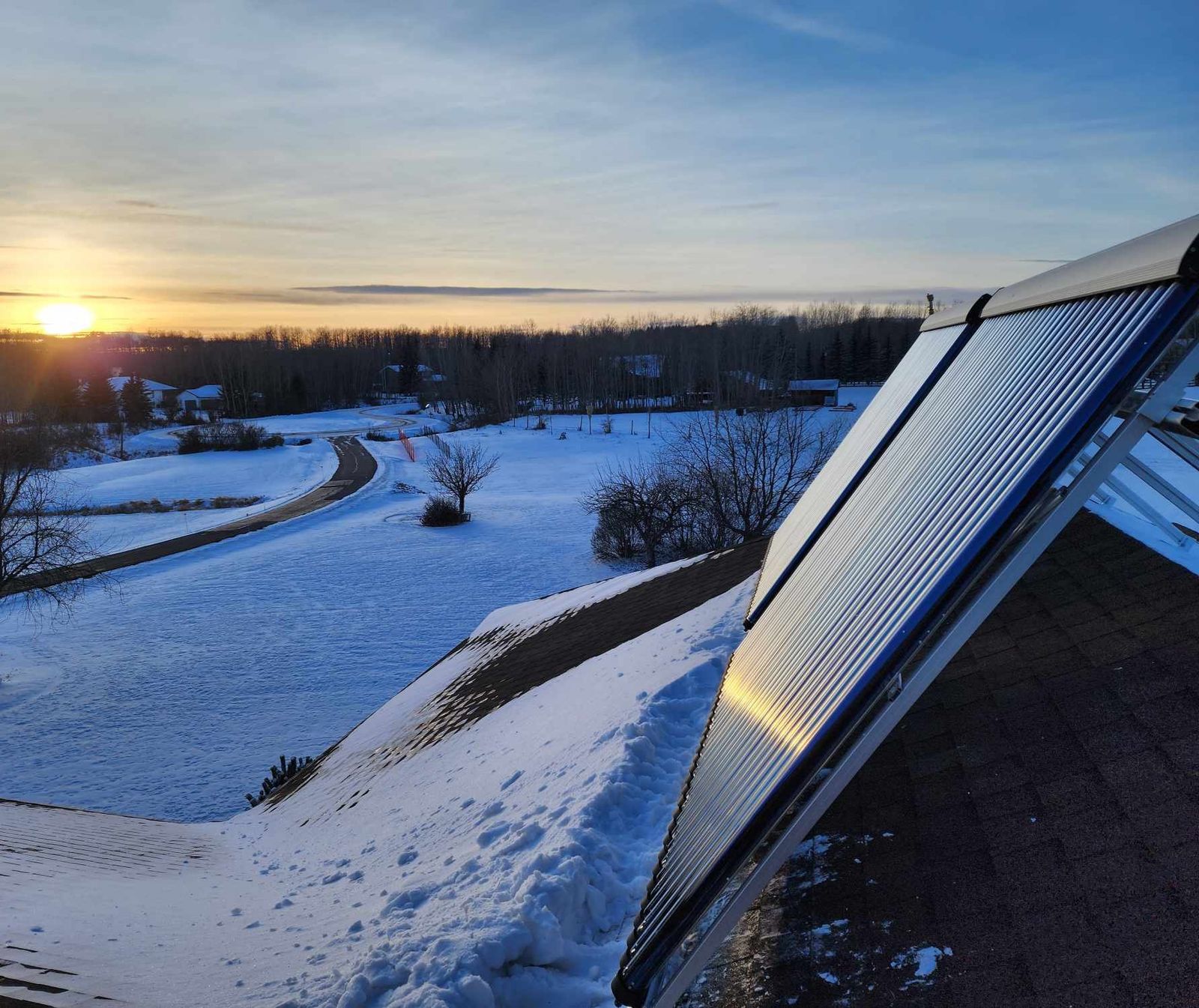
Roof-mounted evacuated-tube solar thermal collectors in a Chinook Solar installation
FIELD WORK / ALBERTASolar Thermal InstallationEvacuated-tube collector system · original Chinook Solar archive

ALBERTA SOLAR THERMAL CALCULATOR

What could solar hot water save at your home?

Use the gas consumption from your Alberta bills to estimate the gigajoules solar thermal could displace. Add your hot-water tank size and age, and tell us whether you have in-floor heating, for a practical starting point on collector count and storage.

Planning estimate only. A site review confirms the system design, suitability and expected contribution. No address mapping or payment details required.

FIRST, LET'S EXPLAIN THE TECHNOLOGY

Your roof can do more than make electricity. It can help heat your water.

Solar thermal collectors capture sunlight as heat, not electricity. In a suitable system, that energy is transferred to an insulated hot-water tank and can help provide domestic hot water or assist compatible in-floor and other hydronic heating.

01Sunlight enters

Evacuated glass tubes absorb solar radiation.

02Heat reaches the manifold

A heat pipe carries collected energy toward the insulated header.

03Heat moves to storage

A controlled circuit and heat exchanger can warm a water tank.

04Your building uses it

Stored solar heat helps meet demand, supported by backup heating.

Why the evacuated tubes? A vacuum works like the insulation of a thermos, reducing heat loss even when the air outside is cold. Usable winter heat still depends on available sunshine, system design and storage.

TWO APPLICATIONS · ONE SOLAR THERMAL TECHNOLOGY

See exactly where the solar heat goes.

♨

Closed-loop hot water and radiant floor

Evacuated-tube collectors send solar heat into an internal storage-tank coil. Cooler solar fluid returns through the pump to the manifold, while separate circuits provide domestic hot water and hydronic space heating.

View the animated closed-loop system ↗
≋

Seasonal solar pool heating

An indirect pool system circulates collector fluid through one side of a heat exchanger, while a separate filtered pool-water circuit moves through the other side and returns warmed to the pool.

View the animated pool heating system ↗

Technical system examples are for education and must be adapted to the actual site, heat load and manufacturer instructions. The pool application is not a claim that the seasonal domestic-hot-water blueprint depicts a pool installation.

A VISUAL INTRODUCTION TO SOLAR HEAT

A collector for heat—not another electric panel.

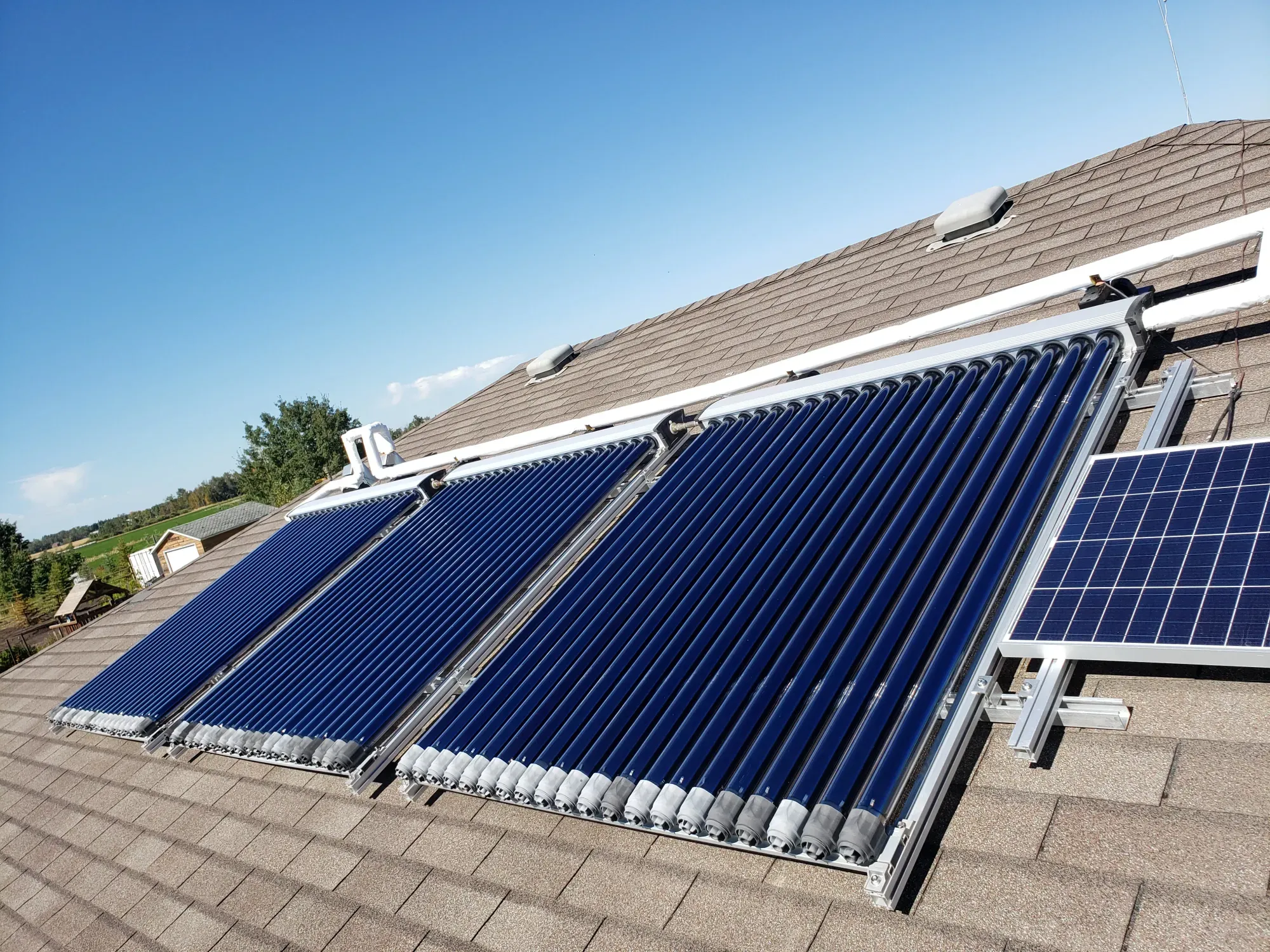
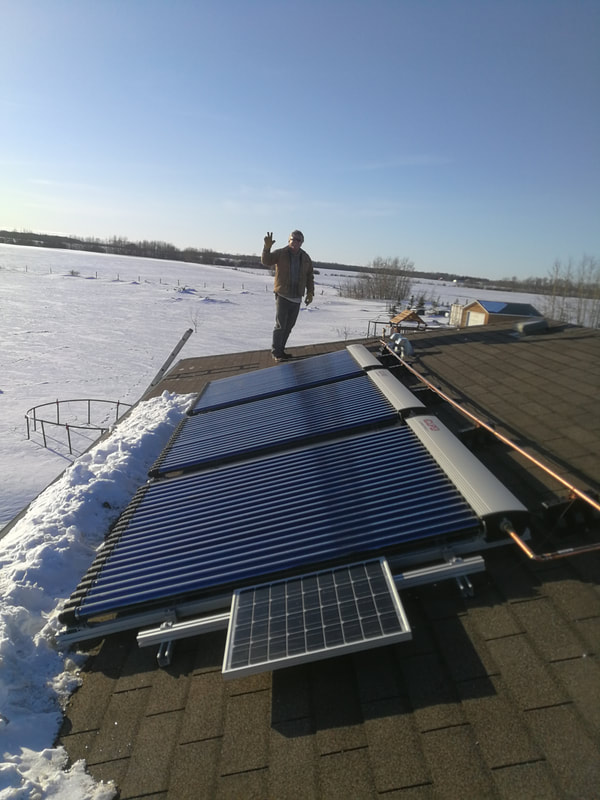
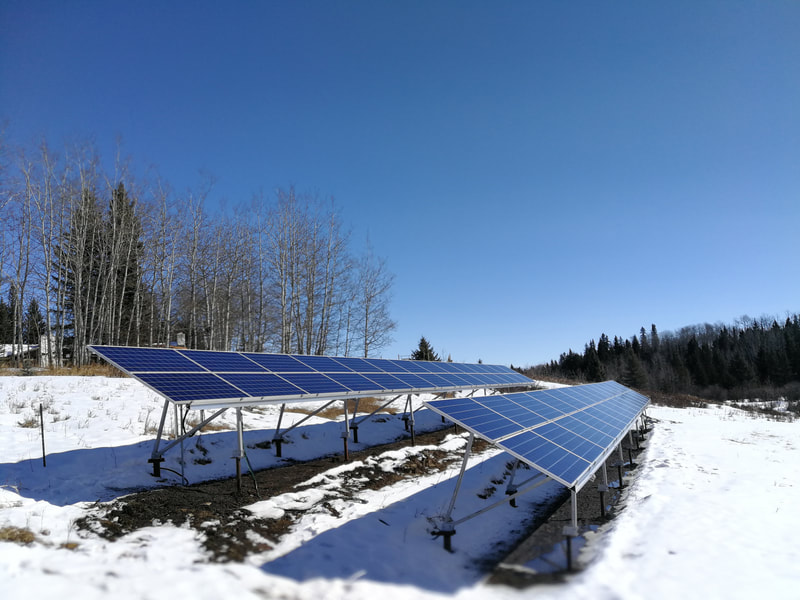
Evacuated glass tubes form a different type of solar system from photovoltaic panels. Here are actual installation photos from Chinook’s archive: tubular solar thermal collectors that move energy into a heating circuit, and solar PV modules that produce electricity.

Different technologies, different jobs. Production output depends on the actual equipment and conditions.

Explore Solar Education ↗
Evacuated-tube solar thermal collector array on a snowy roof in Alberta, with a small photovoltaic module visible
Solar thermal: evacuated tubes capture useful heat in winter sunshine.
Ground-mounted photovoltaic panels at a snowy rural installation
Solar PV: flat photovoltaic modules generate electricity.

01 / SOLUTIONS

A smarter way to capture sun, heat and power.

Solar electricity and solar heat solve different problems. Start with the application, then design the right combination of generation, storage, controls and backup.

Evacuated-tube solar thermal collectors on a snow-covered roof at sunset

01 / SOLAR THERMAL

Turn sunlight into useful heat.

Evacuated-tube solar thermal systems can contribute to domestic hot water and suitably designed hydronic heating applications, with storage and backup matched to the load.

Explore thermal systems ↗
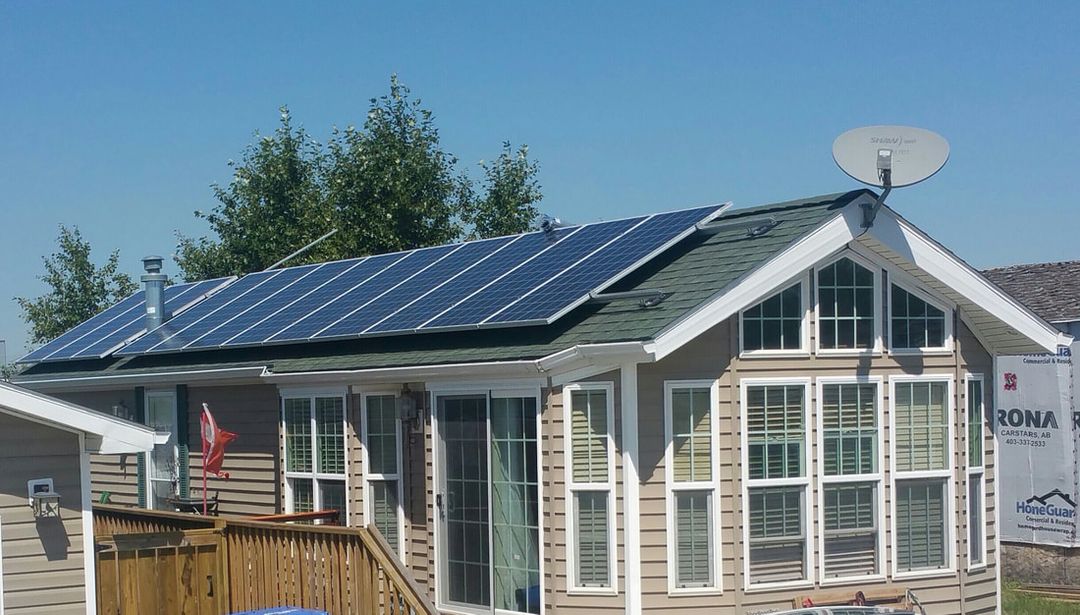
Rooftop solar photovoltaic panels on a home with a front deck

02 / SOLAR ELECTRICITY

Make more of your own electricity.

Solar PV turns sunlight into electricity. Grid-tied, hybrid and storage decisions depend on the building's loads, utility connection and real operating requirements.

See commercial PV work ↗
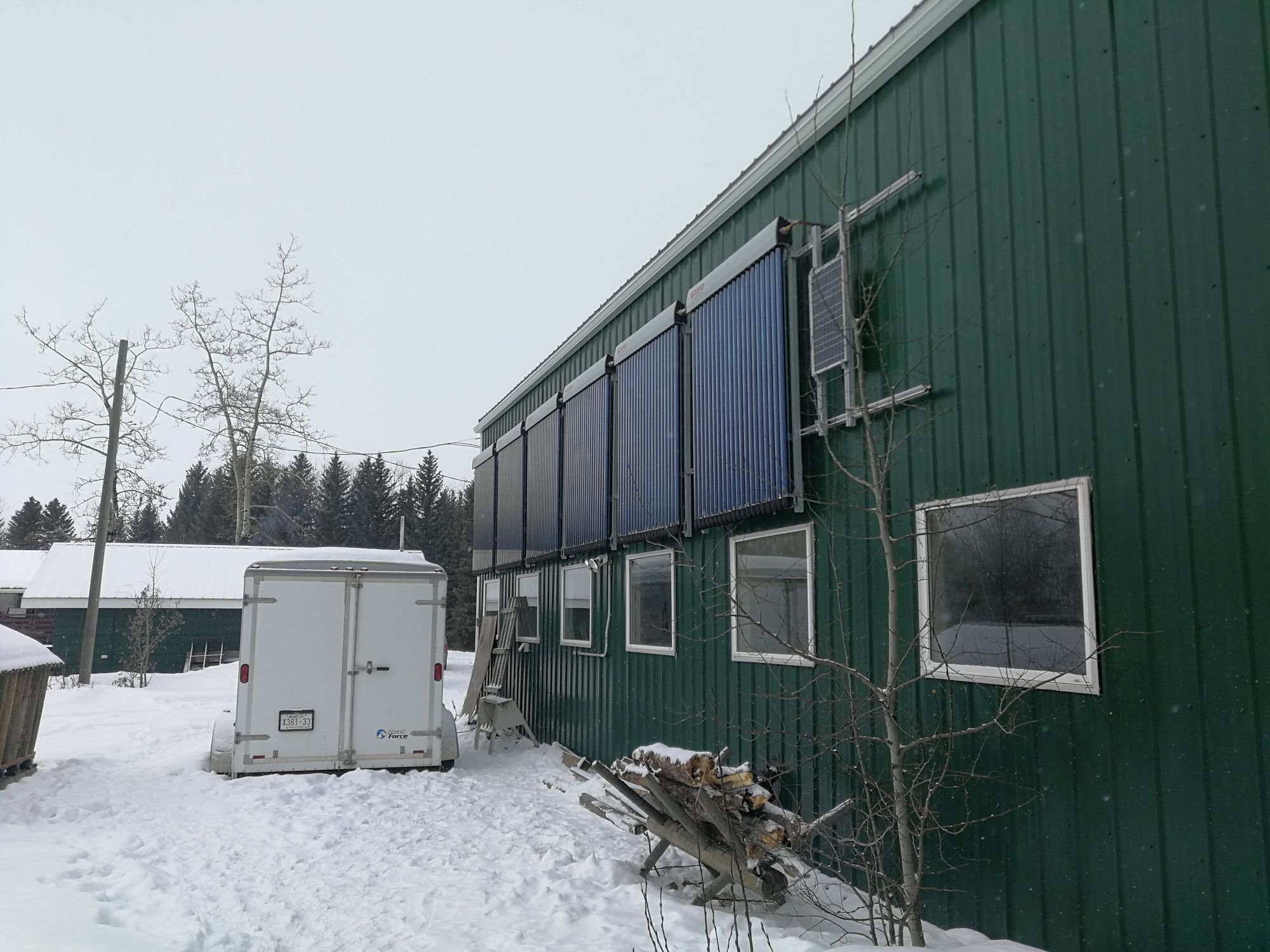
Solar thermal collectors mounted on the outside wall of a green farm building in winter

03 / HYBRID SYSTEMS

Design systems that work together.

Combine useful heat, electrical generation and existing equipment where the application supports it. Winter performance and reliable backup are part of the design.

View a hybrid installation ↗

SOLAR FINANCING EDUCATION

Can Alberta's Clean Energy Improvement Program help finance your solar upgrade?

Learn how Calgary CEIP works with solar electricity and eligible solar thermal water heating, including the requirements for certified collectors, the approval process, financing terms, and property-tax repayment. CEIP is repayable financing—not a free grant.

Explore the complete CEIP guide ↗

BUILT FOR REAL APPLICATIONS

From the farm to the mechanical room.

Different heating and electrical loads call for different solutions. Project suitability requires engineering and current equipment availability.

02 / PROVEN APPLICATIONS

Our work, not just our words.

Explore Chinook Solar installations across Alberta, with original photographs and context for each application.

SUNDRE AREA · ALBERTA

Bergen Farm

Rural hybrid solar and thermal heating

A farm-building installation combining rooftop solar electricity and wall-mounted solar thermal collectors with hot-water storage and existing heating equipment.

Read original project ↗

WATER VALLEY · ALBERTA

Greenhouse Solar Heating

Thermal collectors and hydronic integration

A greenhouse project using evacuated-tube solar thermal collectors. Explore the original installation photographs and project context.

Read original project ↗

CALGARY · ALBERTA

Oxypro Commercial PV

Commercial rooftop solar electricity

A commercial rooftop solar photovoltaic installation in Calgary. Explore the project photographs and installation context.

Read original project ↗

Explore additional Alberta installations in Chestermere, Didsbury and Gull Lake.

03 / THE TECHNOLOGY

The right collector is only part of the system.

Solar thermal collectors harvest heat. A usable installation also requires a compatible storage tank, controls, pumps, freeze protection, backup heat and an engineered hydraulic connection.

Collector technologyEvacuated tubes and manifold assembly
ApplicationsHot-water preheat and selected hydronic heat loads
ConditionsSite-specific design, seasonal variation and backup provision

Explore the 30-tube collector and system components. Contact Chinook Solar to confirm current availability, included equipment, pricing and warranty for your project.

View full 30-tube specifications ↗

DESIGN CONSIDERATIONS

  • Heat demand: useful energy, not just headline collector capacity
  • Storage sizing: tank volume, temperatures and heat transfer
  • System integration: boilers, domestic hot water and in-floor loops
  • Climate: snow, freeze protection and winter sun angle
  • Controls: pumps, sensors, backup and excess summer heat
  • Evidence: verified manufacturer data and monitored performance

Contact Chinook Solar to confirm the design, supply and installation scope available for your project.

04 / HOW WE APPROACH PROJECTS

Start with the need. Build around the numbers.

A useful solar conversation begins with heat or electricity demand, existing infrastructure, the site and operating expectations—not a one-size-fits-all equipment package.

01

Understand

Clarify the building, energy load, location, seasonal use, and practical objectives.

02

Evaluate

Compare thermal, PV, storage, controls, backup and their suitability to the site.

03

Specify

Define system components, responsibilities, operating assumptions and scope.

04

Review

Document commissioning, maintenance expectations and measured outcomes when available.

The scope and responsibilities are confirmed for each project.

05 / QUESTIONS WORTH ASKING

Clear answers. Better decisions.

What is the difference between solar thermal and solar PV?

Solar thermal collectors transfer solar energy into usable heat through a thermal system. Solar photovoltaic panels generate electricity. They can complement each other, but neither replaces engineering for the other type of load.

Can solar thermal work during Alberta winters?

Solar thermal can produce heat in cold weather when sunlight and operating conditions are suitable. Actual contribution depends on collector design, orientation, temperatures, demand and storage. Heating backup is generally part of a resilient design.

What makes a system off-grid?

The answer depends on what must operate without a utility supply: pumps and controls, heating, electricity, or an entire building. A solar thermal collector by itself does not make a building energy-independent.

How much does a system cost?

Installed cost depends on equipment, collector area, controls, piping, heat exchangers, electrical work, storage, site access and labor. A component-only price must not be confused with an installed-system quotation.

LET'S TALK ABOUT YOUR ENERGY REQUIREMENTS

Have a site or project in mind?

Tell the Chinook team what you want to heat or power and where the project is located. Use the contact form to start a project discussion.

Contact Chinook Solar ↗