Solar thermal heat for hot water and hydronic systems.
Evacuated-tube solar thermal collectors capture useful heat, which can be transferred into water storage and suitable existing heating systems. Collector selection, storage, pumps, controls, backup and freeze protection must be designed together.
See how evacuated-tube collectors deliver useful heat.
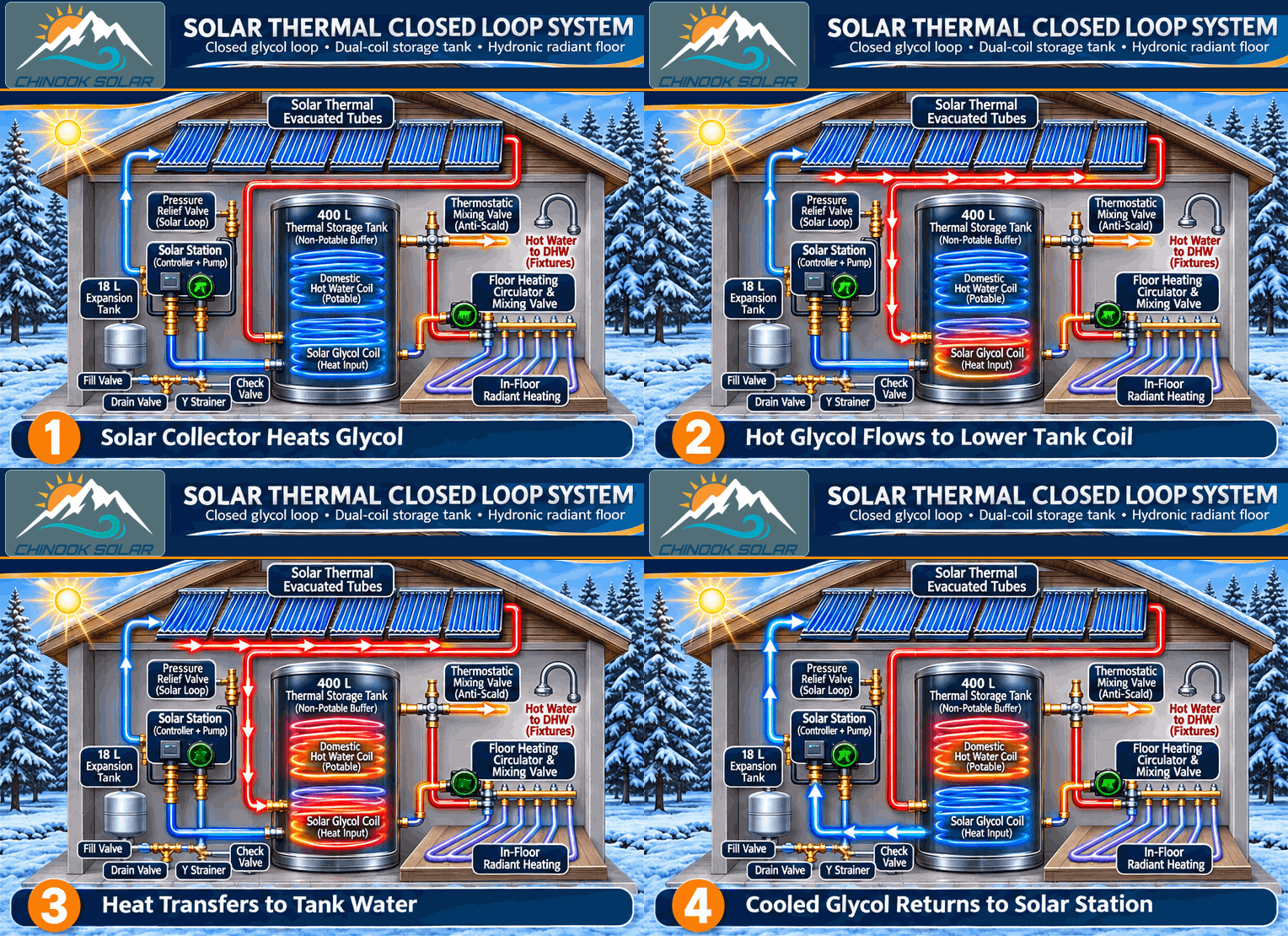
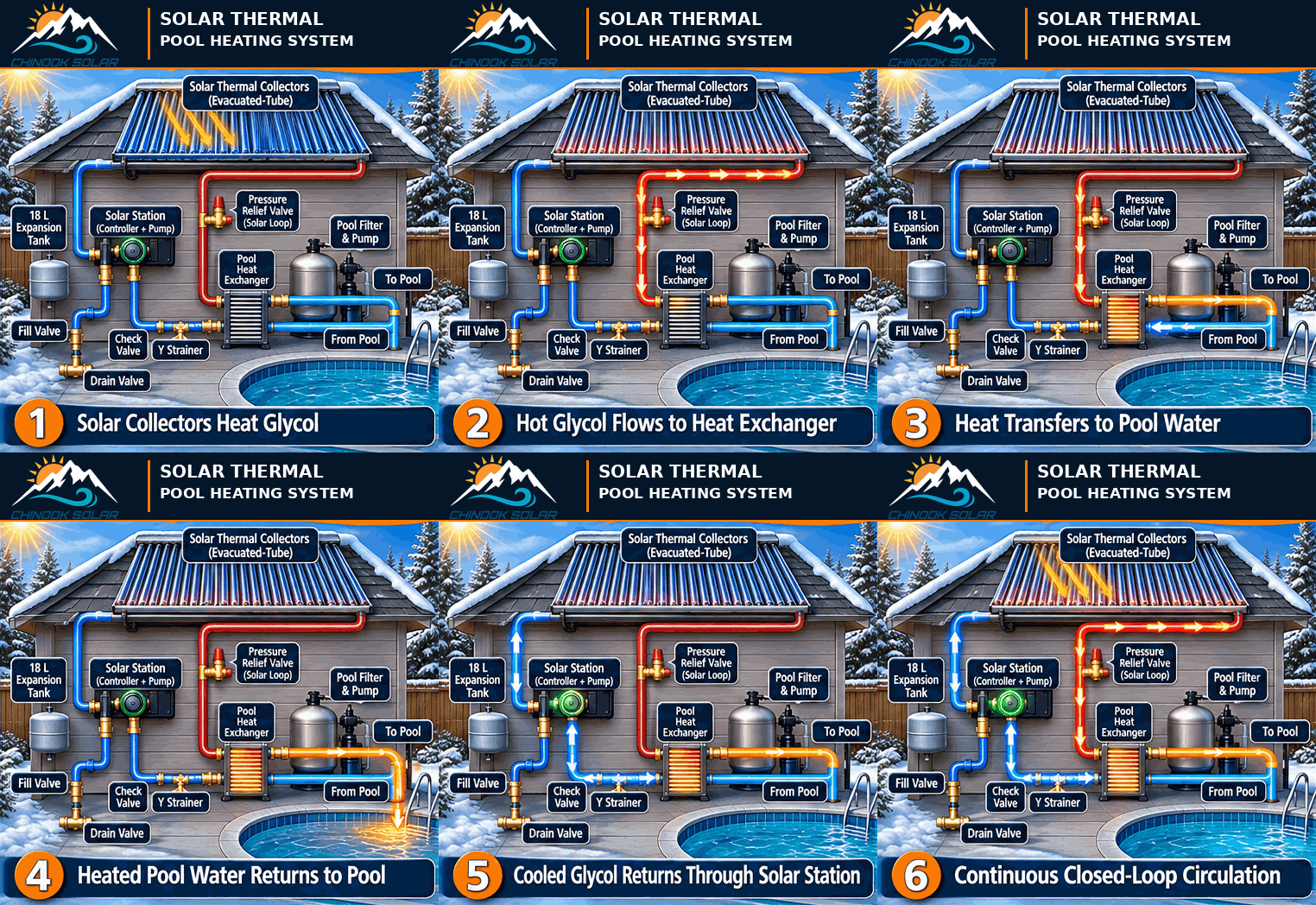
These two diagrams explain different applications for the same solar-heat collection technology: a closed-loop solar hot-water and radiant-heating system, and a seasonal pool heating system using an indirect heat exchanger. The solar fluid always circulates independently of domestic water or pool water.
Closed-loop hot-water and radiant-floor heating
Hot collector fluid enters the top of the lower solar coil inside a thermal storage tank. It flows through that coil, transferring energy to the stored water, and exits from the bottom back through the solar pump to the collector inlet. Separately, an upper internal coil can heat domestic water, while a controlled hydronic circuit supplies warm water to radiant floors.
Solar thermal heating: hot collector fluid transfers heat to storage and returns to the collector in the same closed loop. View full animation
Follow red arrows for solar supply and blue arrows for the closed-loop return. The expansion vessel connects to a tee; it is not a through-flow destination.
Seasonal swimming-pool heating
Evacuated-tube collectors circulate heat-transfer fluid through the solar side of a separate heat exchanger. Filtered pool water circulates through the other side, receives the heat without mixing with solar fluid, and returns to the pool. Seasonal design and protection must suit the property's climate and plumbing.
Solar pool heating: heat is transferred through a heat exchanger. The two fluids remain separate. View full animation
The pool diagram is an educational example of indirect solar pool heating. Exact piping, equipment and safety components must be selected for the site.
Solar thermal is heat generation, not photovoltaic electricity. Its useful contribution depends on the temperature and volume of heat needed, seasonal conditions and the thermal system around the collector.
01 / WHAT MATTERS
The important considerations.
01
Domestic hot-water preheat
Use solar heat to assist water heating where storage and demand justify it. Backup heat remains part of most practical systems.
02
Hydronic and in-floor integration
Consider exchanger design, temperature targets, existing boiler conditions and control strategy.
03
Whole-system specification
Select collectors, piping, pumps, expansion, controls and storage against load rather than advertising collector capacity alone.
GENUINE CHINOOK PHOTO ARCHIVE
From collectors to real installations
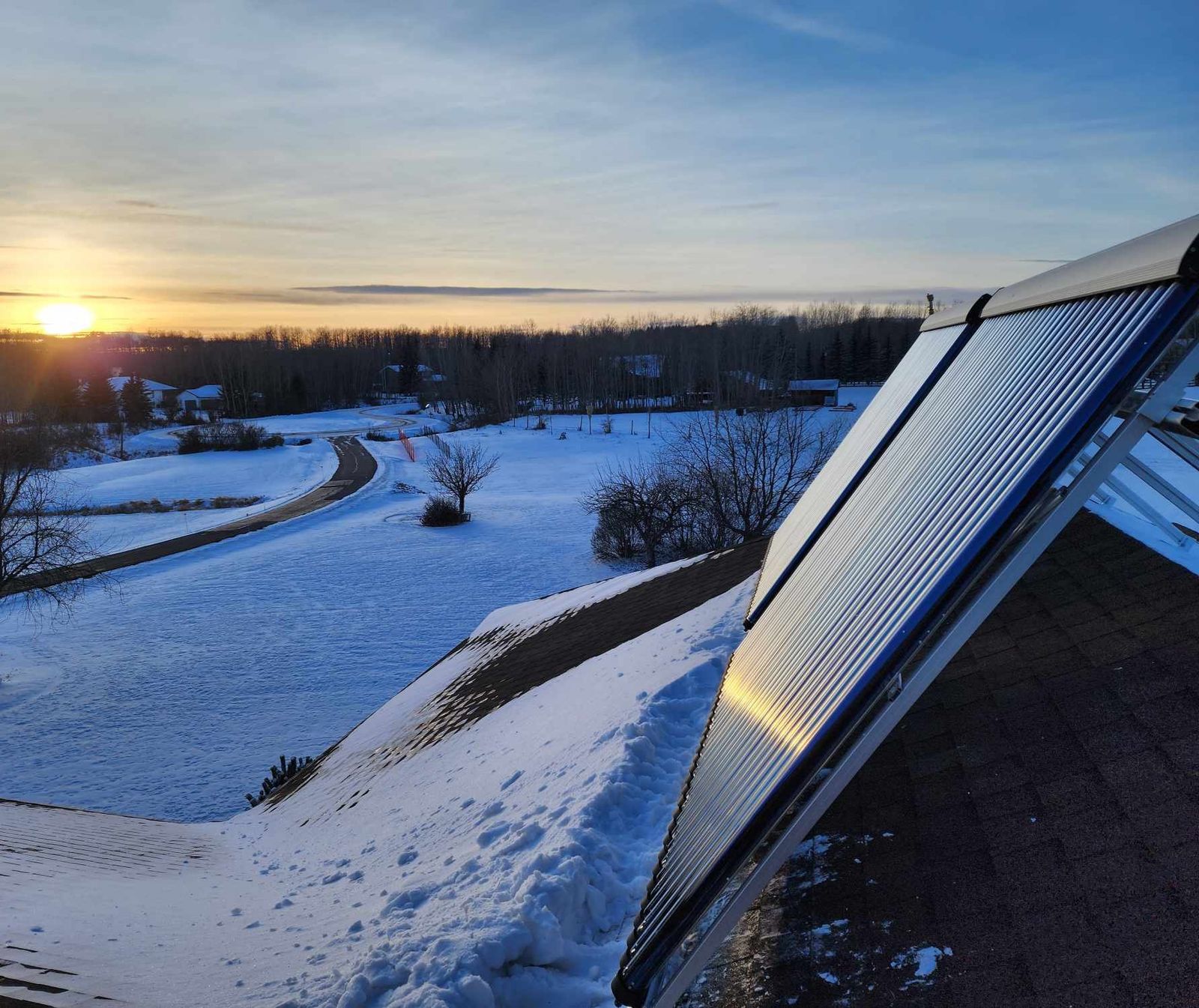
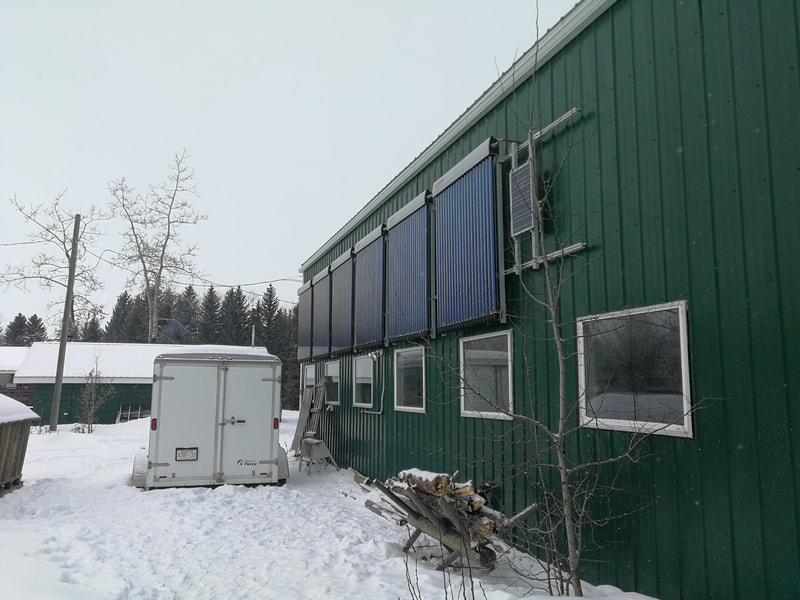
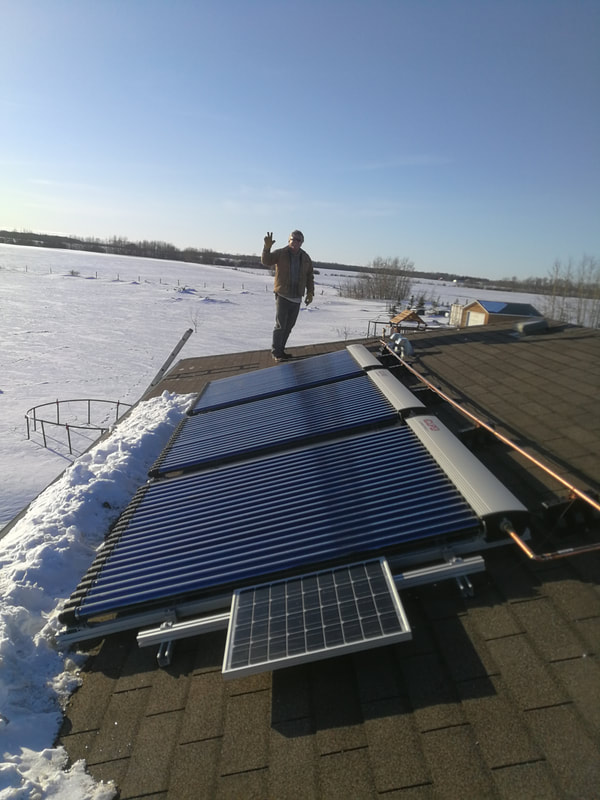
Real field photographs show an evacuated-tube array mounted on a wall and another used in snowy rooftop conditions. Solar heating performance depends on the complete system, not the appearance of the tubes.
Evacuated solar thermal collectors mounted vertically on a green farm building.Rooftop evacuated glass-tube solar thermal collector array in winter.
02 / EXISTING EVIDENCE
Relevant examples and source information.
Explore the project records below. Confirm site-specific equipment, operating conditions and measured performance before using a past installation to plan a new system.
Can a solar thermal collector heat a home independently?
Not automatically. Solar thermal supplies heat when conditions permit; winter load, building efficiency, storage and backup determine whether it is an appropriate contribution.
What is the difference between kW and kWh?
kW describes a rate of heat or electric power. kWh describes the energy supplied over a period. A project's annual savings cannot be calculated from collector rating alone.
What documentation should a quote include?
At minimum, equipment model and certification, thermal-load assumptions, included components, site-specific scope, warranties, installation roles and commissioning expectations.
PLAN A MORE INFORMED PROJECT
Start with the site. Design for the need.
Tell us about your property, current heating system and energy use to discuss the next steps for your project.